
Flag

We stand with Ukraine and our team members from Ukraine. Here are ways you can help

Get exclusive access to thought-provoking articles, bonus podcast content, and cutting-edge whitepapers. Become a member of the UX Magazine community today!

Home ›› Design ›› User Research

User Research

Read these first

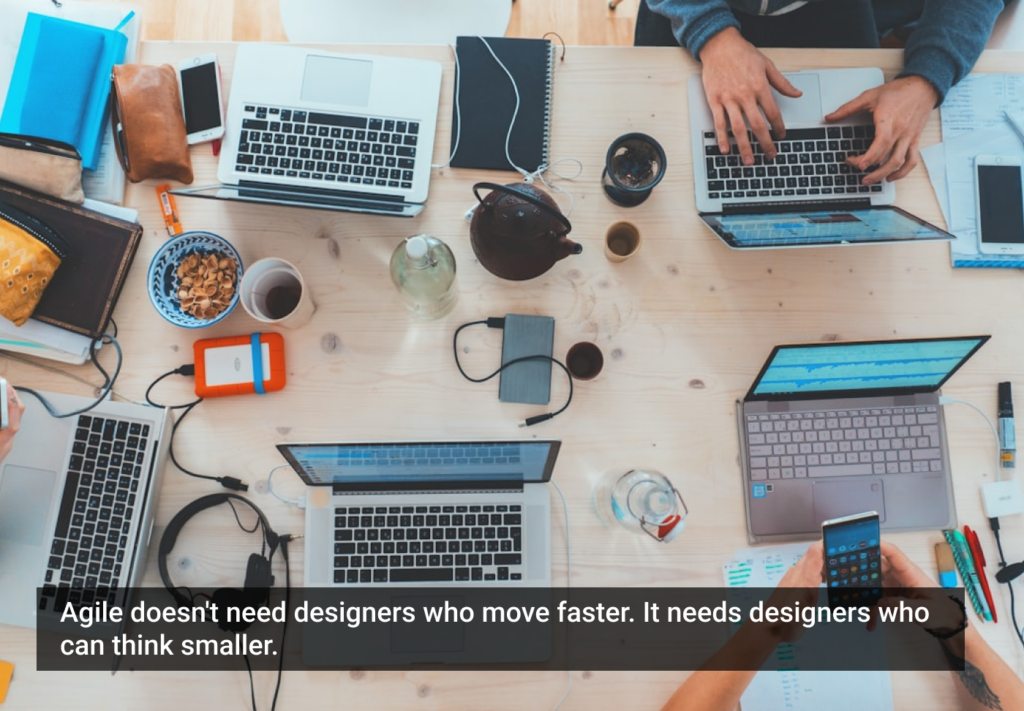
Learn why the real design challenge of agile is not speed but learning to design smaller, one valuable slice at a time.

Article by Paivi Salminen
Designing Small Is Harder than Designing Big
  • The article suggests that agile design is not about quick development but rather the more difficult discipline of designing smaller, resisting the temptation to map out complete systems, avoiding the snare of horizontal slicing, and inquiring into what the smallest iteration of an idea is that still provides real value to users.
Share:Designing Small Is Harder than Designing Big
5 min read

Find out why your most important design elements keep getting ignored and what you can do about it.

Article by Tushar Deshmukh
Attention Engineering: Why Users Ignore Even the Most Important Elements
  • The piece explains why users keep missing important buttons and instructions, not because they’re careless, but because the brain automatically blocks out most of what it sees and shows designers how to work with this instead of fighting it.
Share:Attention Engineering: Why Users Ignore Even the Most Important Elements
6 min read

Discover how a simple comprehension test reveals if mobile content is too hard to read.

Article by Paivi Salminen
Why Reading on Mobile Is Uniquely Challenging
  • The article explains why mobile reading is harder: small screens and distractions make people miss information even when it’s there.
  • It introduces the cloze test, which removes words to measure real understanding: comprehension drops from 39% on desktop to 19% on mobile.
  • The piece argues that mobile content needs simpler language because the real question is: Does this make sense when life gets in the way?
Share:Why Reading on Mobile Is Uniquely Challenging
4 min read

Learn why products fail despite good design.

Article by Tushar Deshmukh
The Psychology Gap: Why Teams Misinterpret User Behavior
  • The article explains why teams misread users: designers work in calm environments while users operate under stress and distraction, creating a gap between how products are built and how they’re actually used.
  • It shows how team biases, assuming users will “figure it out” or projecting their own behavior, turn assumptions into bad design before testing even begins.
  • The piece argues products fail because teams misunderstand how users think and feel, not because screens are wrong, and fixing this means designing for emotion, not just logic.
Share:The Psychology Gap: Why Teams Misinterpret User Behavior
8 min read

Explore why psychology, not pixels, decides whether users flow effortlessly or freeze in confusion, and how understanding cognition changes everything about UX design.

Article by Tushar Deshmukh
The Cortex-First Approach: Why UX Starts Before the Screen
  • The article explains why UX design fails when it ignores what users’ brains are already doing before they even see the interface or click the first button.
  • The piece shows how aligning design with users’ mental models and emotional states creates effortless experiences, while violating them causes hesitation even in “perfect” interfaces.
  • It outlines the Cortex-First approach, showing how great UX starts by understanding cognitive patterns, emotional responses, and subconscious expectations rather than visual aesthetics.
Share:The Cortex-First Approach: Why UX Starts Before the Screen
6 min read

Trusting AI isn’t the goal — relying on it is. This article explores why human trust and AI reliance are worlds apart, and what UX designers should focus on to make AI feel dependable, not human.

Article by Verena Seibert-Giller
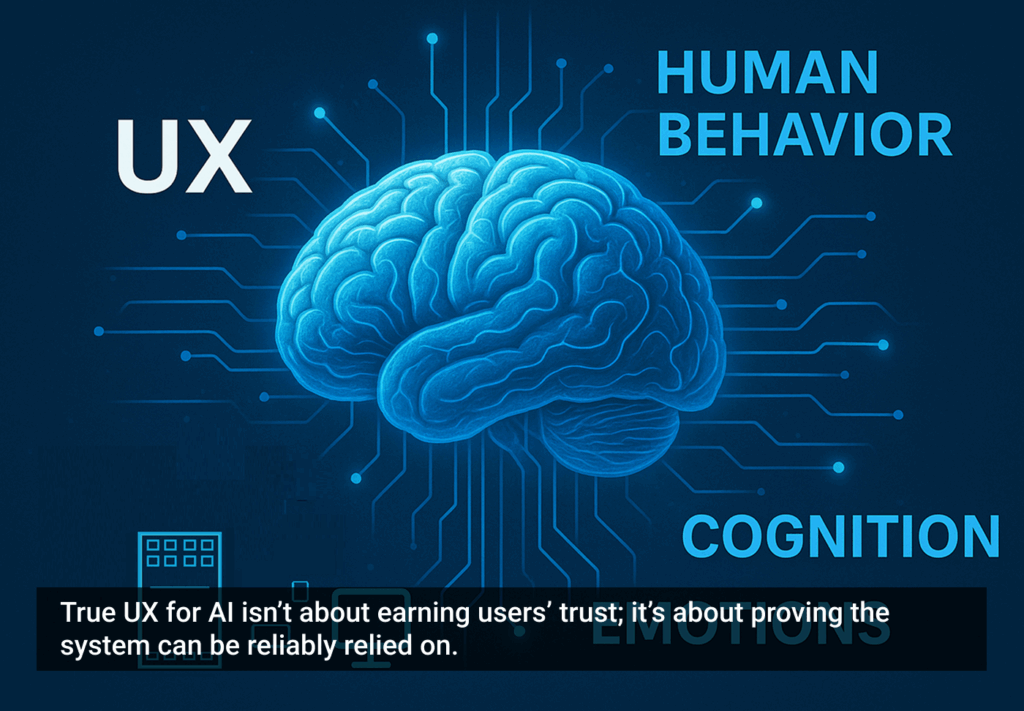
The Psychology of Trust in AI: Why “Relying on AI” Matters More than “Trusting It”
  • The article argues that “reliance,” not “trust,” is the right way to think about users’ relationship with AI.
  • It explains that human trust and AI reliance are driven by different psychological mechanisms.
  • The piece highlights that predictability, transparency, and control make users more willing to rely on AI.
  • It concludes that users don’t need to trust AI as a partner — only rely on it as a dependable tool.
Share:The Psychology of Trust in AI: Why “Relying on AI” Matters More than “Trusting It”
4 min read

Join the UX Magazine community!

Stay informed with exclusive content on the intersection of UX, AI agents, and agentic automation—essential reading for future-focused professionals.

Hello!

You're officially a member of the UX Magazine Community.
We're excited to have you with us!

Thank you!

To begin viewing member content, please verify your email.

Get Paid to Test AI Products

Earn an average of $100 per test by reviewing AI-first product experiences and sharing your feedback.

    Tell us about you. Enroll in the course.

      This website uses cookies to ensure you get the best experience on our website. Check our privacy policy and